
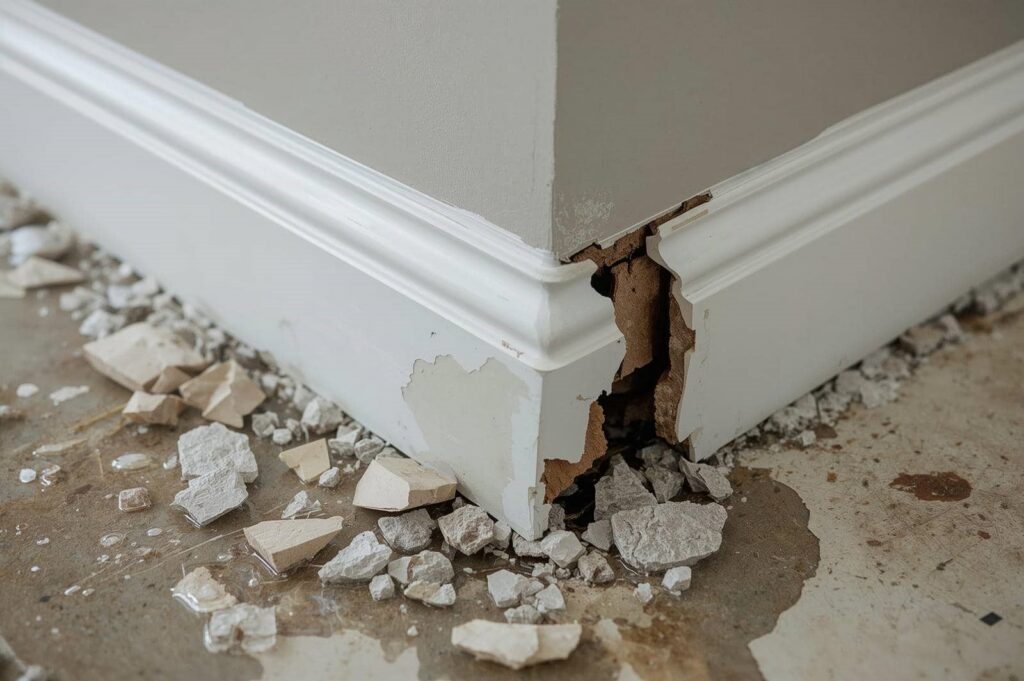
Many homeowners underestimate the potential for hidden water damage lurking within their walls and ceilings. It can manifest silently, often going unnoticed until it’s too late. Discoloration, peeling paint, and musty odors are just the beginning. If you know what to look for, you can catch these issues early. But what specific signs should you be watching for, and how can they impact your home? Understanding these details is vital for effective prevention.
Key Takeaways
- Look for discoloration on walls, ceilings, or floors, which may indicate hidden water damage.
- Musty odors, especially in basements or attics, often signal underlying moisture issues.
- Monitor for warped or buckled flooring, as this can suggest prolonged water exposure.
- Check for water stains in common areas like corners and around windows for signs of leaks.
- Inspect plumbing fixtures for wear patterns, rust, or corrosion that could indicate hidden leaks.
What You Need to Know About Hidden Water Damage and How to Address It
Although you may not see visible signs of water damage, it can lurk behind walls, under floors, or within ceilings, causing significant structural issues over time.
To guarantee your home remains safe and sound, implementing water damage prevention strategies is vital. Regularly inspect areas prone to moisture, such as bathrooms and kitchens.
Invest in moisture detection devices to catch hidden leaks early. These tools can alert you to problems before they escalate, saving you both time and money.
Additionally, maintain proper ventilation in your home to reduce humidity levels.
Common Signs of Water Damage in Homes
When you’re evaluating your home for potential water damage, it’s critical to recognize the common signs that can indicate a problem.
Look for discoloration on walls, ceilings, or floors, as these could be signs of underlying moisture issues. Peeling paint or wallpaper often suggests trapped moisture, while a musty odor typically indicates hidden dampness.
Check for warped or buckled flooring, which can occur due to prolonged exposure to moisture. Additionally, inspect areas around windows and doors for leaks, as these are common entry points for water.
How to Spot Water Stains on Walls and Ceilings
When inspecting your walls and ceilings for water stains, pay close attention to common stain patterns, as they often reveal the source of the problem.
Look for changes in color and texture, which can indicate moisture issues beneath the surface.
Additionally, watch for signs of mold growth, as this can signal prolonged water exposure, necessitating immediate action.
Common Stain Patterns
As you inspect your home, spotting water stains on walls and ceilings can be essential for preventing further damage.
Focus on common stain locations like the corners of rooms, around windows, and near plumbing fixtures. These areas are often the first to show signs of moisture intrusion.
Pay attention to stain color significance; yellowish-brown stains might indicate long-term leakage, while dark spots can suggest mold growth.
Additionally, if you see a ring-shaped stain, it may point to a past leak, whereas a spreading stain could signal an ongoing issue.
Color and Texture Changes
While you might overlook minor imperfections on your walls and ceilings, subtle color and texture changes can be essential indicators of hidden water damage.
Start by inspecting for color variations; look for dark spots, yellowing, or browning that disrupt the uniformity of your paint or wallpaper. These discolorations often signal moisture infiltration.
Next, pay attention to texture anomalies. Areas that feel softer, bubbled, or warped may indicate that water has compromised the material beneath. Use your fingertips to detect any irregularities that could suggest hidden damage.
Mold Growth Indicators
Even if you don’t notice any obvious leaks, it’s crucial to be vigilant about water stains on your walls and ceilings, as they can reveal hidden mold growth.
Spotting these stains early can help you implement effective mold removal and prevention strategies. Here are key indicators to look for:
Discoloration: Look for yellow, brown, or green patches that signal moisture.
Texture Changes: Feel for peeling paint or bubbling wallpaper, indicating dampness beneath.
Musty Odors: A persistent musty smell often accompanies mold presence.
Condensation: Excess moisture on surfaces can lead to mold, especially in humid areas.
Identifying Musty Odors as Key Indicators of Water Damage
Musty odors can be a telltale sign of hidden water damage lurking within your home. When you notice these musty smells, it’s vital to investigate potential odor sources.
Common areas include basements, attics, and behind walls, where moisture may accumulate unnoticed. Pay attention to damp carpets or discolored drywall, as these can indicate water intrusion.
You might also find musty odors around plumbing fixtures or appliances that use water. If the smell persists despite cleaning, it’s a strong indicator of underlying issues.
Addressing these odors promptly is essential, as they often signal more serious problems that could affect your home’s structure and your family’s health.
Trust your senses; they can guide you to resolving potential water damage issues.
How to Identify Mold Growth and Its Implications
To effectively identify mold growth, you need to recognize the common types, such as black mold and brown mold, which often thrive in damp environments.
The health impacts of mold exposure can range from mild allergic reactions to more severe respiratory issues, making it essential to act swiftly.
Employing detection techniques, like visual inspections and moisture meter readings, allows you to assess the situation accurately and take the necessary steps for remediation.
Common Mold Types
While you mightn’t always see mold growth, recognizing the common types can be vital in addressing hidden water damage in your home.
Here are four prevalent mold types to watch for:
Aspergillus – Often found in damp areas, it can produce mycotoxins.
Cladosporium – This mold thrives in both warm and cool conditions, often appearing as green or black spots.
Stachybotrys – Commonly known as black mold, it requires constant moisture and poses serious risks.
Penicillium – Recognizable by its blue or green hues, it often appears on water-damaged materials.
Implementing mold prevention strategies and utilizing effective mold removal techniques will help guarantee your living space remains safe and healthy.
Don’t underestimate the importance of identifying these molds early!
Health Impacts
As you monitor your home for signs of hidden water damage, recognizing the health impacts of mold growth is essential.
Mold can pose significant health risks, particularly for those with respiratory issues, allergies, or weakened immune systems. Symptoms like sneezing, coughing, and skin irritation may arise quickly, but long-term effects can be even more concerning. Prolonged exposure may lead to chronic respiratory conditions, neurological issues, or heightened allergic reactions.
It’s vital to identify areas where moisture accumulates, as these are breeding grounds for mold. Regular checks in bathrooms, basements, and around windows can help you catch mold early.
Detection Techniques
Identifying mold growth requires a systematic approach, especially considering its potential health implications.
To effectively detect mold, you can use the following techniques:
Visual Inspection: Look for discoloration on walls, ceilings, and floors, especially in damp areas.
Moisture Meters: Use these devices to measure moisture levels in materials; high readings can indicate hidden mold.
Thermal Imaging: Employ this technology to identify temperature differences that suggest moisture accumulation, guiding you to potential mold hotspots.
Odor Detection: Be alert to musty smells, often the first sign of mold presence.
Checking for Warping or Buckling Floors: What to Look For
When you walk across your floors, any noticeable warping or buckling can signal hidden water damage that requires immediate attention.
Start with a thorough floor inspection. Look for areas where the surface feels uneven or appears distorted. Pay attention to gaps between boards or tiles, as these can indicate moisture buildup beneath.
Use moisture detection tools, like a moisture meter, to assess levels in suspicious areas. If you notice a soft or spongy feel when walking, it may suggest water has compromised the structural integrity.
Regularly checking for these signs not only helps maintain your home’s safety but also fosters a sense of belonging in a well-cared-for environment.
Don’t ignore these warning signs; they could save you from costly repairs.
How Often Should You Check Your Plumbing Fixtures?
To maintain your plumbing fixtures effectively, establish a regular inspection schedule, ideally every six months.
Look for signs of wear, such as leaks or corrosion, which could indicate larger problems.
Additionally, incorporate seasonal maintenance tips to guarantee your system functions efficiently year-round.
Regular Inspection Schedule
Although it may seem inconvenient, regularly checking your plumbing fixtures is essential for preventing hidden water damage.
Establishing a routine inspection schedule can greatly enhance your damage prevention efforts.
Consider these guidelines for inspection frequency:
Monthly: Check under sinks and around toilets for leaks or dampness.
Quarterly: Inspect hoses and connections on appliances like dishwashers and washing machines.
Biannually: Examine your water heater for rust or pooling water.
Annually: Hire a professional plumber for a thorough inspection of your entire plumbing system.
Signs of Wear
Inspecting your plumbing fixtures regularly is essential, as signs of wear can lead to hidden water damage if left unaddressed.
Look for wear patterns around faucets, pipes, and joints; these can indicate stress that compromises structural integrity. For instance, rust or corrosion on metal fixtures suggests moisture issues that could escalate. Cracks in plastic fittings may also signal impending failure.
It’s wise to check every few months, especially in high-use areas like kitchens and bathrooms. Pay attention to any dripping sounds or unexplained water accumulation; these may indicate deeper problems.
Seasonal Maintenance Tips
Regular maintenance of your plumbing fixtures is essential, especially as seasonal changes can impact their performance and integrity.
To guarantee your plumbing remains in top shape, consider these preventative measures during your seasonal inspections:
Inspect for leaks: Check under sinks and around toilets for any signs of water damage.
Test water pressure: Confirm your faucets and showerheads maintain appropriate pressure.
Clean aerators: Remove and clean faucet aerators to prevent clogs and improve water flow.
Flush water heaters: Remove sediment buildup by flushing your water heater to maintain efficiency.
The Role of Humidity in Detecting Hidden Water Damage
Humidity plays an essential role in revealing hidden water damage, as elevated moisture levels often indicate underlying issues that aren’t immediately visible.
By monitoring humidity levels in your home, you can identify potential water damage before it escalates. Using moisture meters, you can accurately measure the moisture content in walls, floors, and other areas prone to dampness.
If you notice consistently high readings, it’s a sign that there may be hidden leaks or water intrusion. Always pay attention to areas like behind appliances and under sinks, as these are common culprits.
Key Signs of Water Damage in Attics and Basements
While you may not frequently visit your attic or basement, being vigilant about signs of water damage in these areas is crucial for maintaining the integrity of your home.
Regular attic inspections and proper basement ventilation can help you catch issues early.
Here are four key signs to watch for:
Water Stains: Look for discoloration on walls or ceilings.
Mold Growth: Check for black or green patches, indicating moisture problems.
Musty Odors: Notice any strange smells that could signal hidden dampness.
Warped Wood: Inspect beams and flooring for bending or swelling.
Addressing these signs promptly can save you from extensive repairs and guarantee your home remains a safe haven for you and your family.
When to Call a Pro for Water Damage Issues?
Recognizing when to call a professional for water damage issues can be essential for preventing further complications. If you notice persistent leaks, mold growth, or warped surfaces, it’s time to seek a professional assessment.
Ignoring these signs can lead to structural damage and health risks. A pro can identify hidden damage behind walls or under floors that you might overlook.
Additionally, if water damage is extensive or involves contaminated water, it’s important to rely on expert knowledge and specialized equipment.
Don’t wait until the situation worsens; addressing water damage promptly helps safeguard your home and your well-being.
Trusting a professional guarantees thorough evaluation and effective remediation, allowing you to restore your space with confidence.
Frequently Asked Questions
Can Hidden Water Damage Occur in New Homes?
Yes, hidden water damage can occur in new homes due to hidden leaks or construction flaws. Regular inspections help you catch these issues early, ensuring your home remains safe, comfortable, and free from costly repairs down the line.
How Does Temperature Affect Water Damage Detection?
Temperature fluctuations and humidity levels greatly impact water damage detection. When temperatures vary, moisture can hide, complicating your search. Staying aware of these factors helps you uncover potential issues before they become costly problems.
Are There Specific Tools for Detecting Hidden Water Damage?
You can effectively detect hidden water damage using moisture meters and infrared cameras. Moisture meters measure moisture levels in materials, while infrared cameras reveal temperature differences, highlighting areas where water might be lurking beneath surfaces.
What Should I Do Immediately After Discovering Water Damage?
Once you discover water damage, don’t panic! Act fast: turn off the water source, remove excess moisture, and assess the area. Document everything and contact professionals for immediate actions to guarantee safety and prevent further destruction.
Can Hidden Water Damage Lead to Structural Issues?
Yes, hidden water damage can severely compromise structural integrity. When water intrusion occurs, it weakens materials, fosters mold growth, and leads to costly repairs. Addressing leaks promptly is essential to maintain a safe, stable environment.
Review
Staying vigilant for the subtle signs of hidden water damage can save you from costly repairs down the road. By paying attention to discoloration, musty odors, and changes in your home’s structure, you’re not just addressing surface issues you’re safeguarding your sanctuary from the quiet threats that lurk beneath. When in doubt, don’t hesitate to seek professional help. After all, it’s better to uncover the truth sooner rather than letting hidden troubles fester in silence.