When it comes to mold cleaning after water damage, think of it as a battle against a silent invader. You need to recognize the risks and act swiftly to safeguard your health and property. Understanding the signs of mold growth is just the beginning. With the right approach, you can effectively tackle this issue and prevent future outbreaks. Let’s explore the essential steps you should take to ensure a thorough and safe cleanup.
Key Takeaways
- Act quickly to clean mold within 24 to 48 hours after water damage to prevent extensive growth.
- Use protective gear like N95 respirators, gloves, and goggles to ensure personal safety during cleanup.
- Scrub affected surfaces with a suitable cleaner, rinsing thoroughly to remove all mold residues.
- Maintain indoor humidity levels below 60% to prevent future mold growth and promote good airflow.
- Regularly inspect for leaks and moisture issues, and consider hiring specialists for thorough mold assessments and removal.
Mold Risks After Water Damage
When water damage occurs, it’s essential to recognize that mold can start developing within 24 to 48 hours. This rapid mold growth poses significant risks, both structurally and health-wise.
You mightn’t see the mold initially, but it can thrive in hidden areas like walls, ceilings, and under flooring. Exposure to mold spores can lead to various health effects, such as respiratory issues, allergic reactions, and even more severe conditions like asthma.
It’s vital to act swiftly by removing moisture and thoroughly cleaning affected areas to prevent mold from spreading. By understanding these risks, you’re taking the first step in protecting your home and your health, ensuring a safe environment for yourself and your loved ones.
How to Recognize Signs of Mold Growth?
How can you quickly identify signs of mold growth in your home? Start by inspecting areas with elevated indoor humidity levels, typically above 60%.
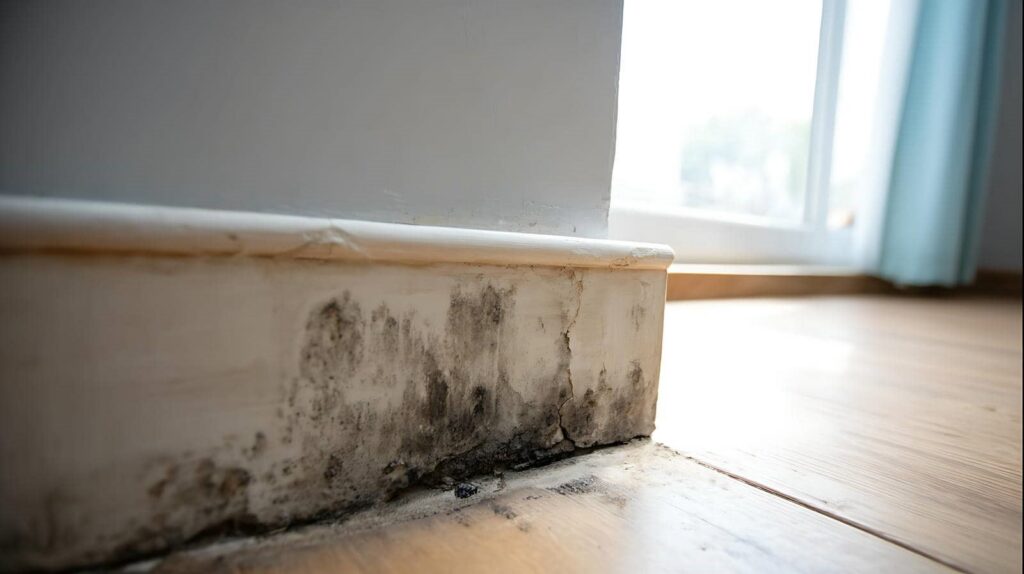
Look for visible mold patches, which often appear as black, green, or white spots on walls, ceilings, and materials.
Employ mold identification techniques such as checking for water stains or musty odors that signal hidden growth.
Pay close attention to damp areas like bathrooms, basements, and around plumbing leaks, as these are prime locations for mold.
Also, observe any respiratory issues that arise, as they may indicate mold presence.
Essential Safety Gear for Mold Cleanup
When tackling mold cleanup, ensuring your safety is paramount.
You’ll need protective clothing to shield your skin from potential irritants and respiratory protection to filter out harmful spores in the air.
Selecting the right gear minimizes health risks and enhances your efficiency during the cleanup process.
Protective Clothing Requirements
For effective mold cleanup, wearing appropriate protective clothing is essential to ensure your safety and minimize health risks. Following safety guidelines ensures you’re well-equipped for the task.
Here’s a list of protective gear you should consider:
- N95 respirator – Filters out mold spores and protects your lungs.
- Rubber gloves – Keep your hands safe from mold and cleaning solutions.
- Goggles – Shield your eyes from irritants and contaminants.
- Full-body suit – Prevents skin contact with mold and hazardous materials.
Using this protective gear safeguards your health and fosters a sense of belonging within a community that prioritizes safety and well-being during mold cleanup efforts.
Your commitment to these practices makes a difference.
Respiratory Protection Importance
While tackling mold cleanup, prioritizing respiratory protection is essential for your health. Mold spores can trigger respiratory illnesses, including asthma and allergic reactions. To safeguard yourself, use a properly fitted N95 respirator or a higher-grade mask that complies with safety regulations.
These masks filter out harmful particles, ensuring that you breathe clean air while working in contaminated environments. Before starting, assess the mold extent and consider using a HEPA-filtered air purifier to further reduce airborne spores.
Always remember, your well-being is a priority; neglecting respiratory protection can lead to long-term health issues. By equipping yourself with the right gear, you’re not just following safety regulations; you’re also fostering a safer community for everyone involved in mold remediation.
Step-By-Step Guide to Cleaning Mold From Surfaces
Although mold removal can seem intimidating, following a systematic approach will make the process more manageable.
To effectively tackle mold growth, use these cleaning techniques:
Assess the area: Identify all affected surfaces and the extent of the mold growth.
Prepare your space: Ensure proper ventilation, wear protective gear, and gather your cleaning supplies.
Choose your cleaner: Use a mixture of water and detergent or a commercial mold remover specifically designed for your surfaces.
Scrub and rinse: Apply your cleaner, scrub the surface thoroughly, and rinse with clean water to remove any residue.
How to Dry Out Affected Areas Effectively
To effectively dry out affected areas after water damage, you must act quickly and methodically to prevent mold from returning.
Start by removing standing water with pumps or wet vacuums. Next, focus on using drying techniques like air movers and dehumidifiers to lower humidity levels.
Ensure proper ventilation by opening windows and doors to promote airflow, which helps disrupt potential mold growth conditions.
Inspect porous materials like carpets and drywall; if they’re saturated, consider replacing them to eliminate hidden moisture.
Monitor moisture levels with a hygrometer until they drop below 60%.
Finally, regularly check for signs of moisture or mold to ensure thorough drying and reinforce your commitment to a safe, mold-free environment.
Preventing Mold Recurrence After Cleanup
Once the cleanup is complete, implementing a proactive strategy is vital for preventing mold recurrence.
You belong to a community that values health and safety, so adopting effective mold prevention strategies can make a real difference.
Here are four critical steps:
Humidity Control: Maintain indoor humidity levels below 60% using dehumidifiers or air conditioning.
Ventilation: Ensure proper airflow, especially in high-moisture areas like bathrooms and kitchens.
Regular Inspections: Routinely check for leaks and water damage to catch issues early.
Use Mold-Resistant Products: Consider mold-resistant paints and materials when renovating or repairing.
The Role of Professional Mold Remediation Services
When you face mold issues after water damage, professional mold remediation services play a critical role in ensuring your space is safe.
They provide expert assessment and inspection to identify the extent of the problem, utilize safe removal techniques to eliminate the mold, and implement preventive measures to avoid future outbreaks.
Relying on their expertise addresses immediate concerns and protects your home in the long run.
Expert Assessment and Inspection
While you might be tempted to tackle mold cleanup yourself, an expert assessment by professional mold remediation services is vital for effective and safe removal.
These experts utilize advanced mold assessment techniques and specialized inspection tools to identify the extent of the problem.
Here’s why you should consider their services:
Thorough Evaluation: They provide a detailed inspection that uncovers hidden mold.
Safety First: Professionals ensure safe handling and disposal of mold-infested materials.
Preventive Measures: They offer recommendations to prevent future mold growth.
Peace of Mind: Knowing experts are on the job can ease your worries about health risks.
Safe Removal Techniques
Although you may feel inclined to handle mold removal on your own, professional mold remediation services employ safe removal techniques that are essential for effective eradication and health protection.
These experts utilize specialized equipment, such as HEPA vacuums, to contain and filter airborne spores, ensuring they don’t spread throughout your home. They follow strict protocols, adhering to safe practices that minimize exposure to harmful mycotoxins.
Professionals also assess the extent of contamination accurately, addressing hidden mold in walls or ceilings. By using appropriate personal protective equipment (PPE), they safeguard themselves and your family during the process.
Ultimately, trusting trained specialists ensures thorough mold removal and fosters a healthier living environment for you and your loved ones.
Preventive Measures Implementation
To effectively prevent mold growth after a water damage incident, professional mold remediation services implement a thorough strategy tailored to your specific situation.
These experts utilize mold prevention strategies and humidity control techniques to safeguard your environment. Here’s how they help:
Comprehensive Assessment: They evaluate the extent of damage and moisture levels in your property.
Targeted Remediation: Professionals remove existing mold and contaminated materials, ensuring a clean slate.
Humidity Control: They employ dehumidifiers and ventilation systems to maintain ideal humidity levels, reducing mold risk.
Ongoing Monitoring: Experts provide follow-up assessments, ensuring your space remains mold-free.
How to Identify and Address Hidden Mold?
How can you effectively identify and address hidden mold after water damage? Start with thorough visual inspections, focusing on areas prone to moisture like behind walls and under carpets.
Utilize mold detection methods such as moisture meters and infrared cameras to reveal damp spots that may harbor hidden mold. If you suspect mold presence, perform air quality tests to confirm.
Don’t overlook musty odors; they often signal mold growth. Once identified, address the issue immediately by removing affected materials and employing proper cleaning solutions.
Ascertain that the area is well-ventilated during remediation to prevent further growth. By following these steps for hidden mold identification, you foster a healthier environment and reinforce your commitment to safety and well-being in your home.
Insurance Considerations for Mold and Water Damage Cleanup
When dealing with mold and water damage cleanup, understanding your insurance policy is crucial. You need to know what your insurance coverage includes, as many policies have mold exclusions that could leave you unprotected.
Here are four key considerations:
Coverage Limits: Check if your policy has caps on water damage or mold restoration costs.
Mold Exclusions: Identify specific mold exclusions that may affect your claim.
Claim Process: Understand the steps for filing a claim to ensure timely assistance.
Professional Help: Consider hiring an expert to assess damage and navigate the insurance landscape.
Choosing Between Chemical and Natural Mold Cleaners
When selecting a mold cleaner, you need to weigh the advantages of chemical solutions against the benefits of natural alternatives.
Chemical cleaners often offer quick, potent results but may carry health risks or environmental concerns.
On the other hand, natural solutions can be safer for your home and family, though they may require more time and effort to achieve the same level of efficacy.
Chemical Cleaners Overview
While you may be tempted to reach for a natural alternative, understanding the efficacy and safety of chemical cleaners for mold removal is essential.
Chemical cleaners can offer significant advantages, including:
Rapid Mold Elimination: They often act quickly, eradicating mold spores within hours.
Deep Penetration: These cleaners can penetrate porous surfaces, ensuring thorough eradication.
Proven Chemical Effectiveness: Formulations are tested to destroy various mold species effectively.
Cleaner Safety: When used according to guidelines, many chemical cleaners are safe for residential use.
It’s vital to weigh these benefits against potential risks.
Benefits Of Natural Solutions
Chemical cleaners are effective but often come with concerns about safety and environmental impact. By opting for natural solutions, you’ll discover eco-friendly alternatives that tackle mold while promoting a healthier living environment.
Natural cleaners, such as vinegar or baking soda, effectively eliminate mold without introducing harmful chemicals into your home. These solutions minimize exposure to toxic substances, providing significant health benefits, especially for those with respiratory issues or allergies.
Moreover, using natural products can foster a sense of community belonging, as many people prioritize sustainability. Ultimately, choosing natural mold cleaners empowers you to protect both your home and the environment, ensuring a safe space for you and your loved ones.
Frequently Asked Questions
How Long Does It Take for Mold to Grow After Water Damage?
Mold can start growing within 24 to 48 hours after water damage, depending on various factors like humidity, temperature, and the materials affected. Understanding this mold growth timeline helps you act quickly to prevent further issues.
Can I Clean Mold Myself, or Should I Hire a Professional?
Imagine battling a storm alone; you might manage, but the aftermath could linger. For DIY mold cleanup, make certain you’re equipped, but hiring professional help ensures thoroughness, safety, and peace of mind in reclaiming your space.
What Types of Materials Are Most Susceptible to Mold Growth?
Wood surfaces and porous materials like drywall, carpet, and insulation are most susceptible to mold growth. They retain moisture, creating an ideal environment for mold spores to thrive, especially in humid conditions.
How Can I Tell if Mold Is Toxic or Non-Toxic?
Determining whether mold is toxic or non-toxic is essential; use mold identification techniques. Toxic mold often has a musty odor, black or green color, and can cause health issues. Always consult professionals for accurate assessment and safety.
Are There Specific Regulations for Mold Cleanup in My Area?
You should check your local regulations for specific cleanup guidelines regarding mold. Each area might have unique requirements, so consulting local health departments or environmental agencies ensures you follow the proper procedures for mold remediation.
Final Thoughts
In the battle against mold after water damage, you must act decisively, clean thoroughly, and dry diligently. You’ll protect your health, preserve your home, and prevent future infestations. By evaluating risks, wearing safety gear, and choosing the right cleaners, you create a mold-free environment. Remember, vigilance is key—monitor humidity, address hidden mold, and consider professional help if needed. With each step, you build a safer, healthier space, ensuring mold remains a distant memory rather than a recurring nightmare.