After experiencing water damage, it’s crucial to implement effective mold prevention strategies to safeguard your home. Mold can develop rapidly in damp environments, and without proper intervention, it can lead to significant health risks and structural issues. This guide outlines key strategies that you can adopt to mitigate these risks effectively. Discover the critical steps you need to take to ensure your home remains mold-free and protected.
Key Takeaways
- Remove standing water immediately to minimize mold growth and ensure proper ventilation for drying affected areas.
- Implement moisture barriers in basements and other damp-prone areas to prevent water intrusion.
- Use dehumidifiers to maintain indoor humidity levels between 30-60%, particularly in high moisture regions.
- Regularly inspect plumbing and roofing for leaks, addressing any issues promptly to prevent water damage.
- Engage professionals for thorough mold inspections and remediation to ensure long-term prevention and safety.
How to Prevent Water Damage in Your Home
To effectively prevent water damage in your home, it’s crucial to identify and address potential vulnerabilities before they escalate. Start by implementing water leak detection systems, which can alert you to issues before they become severe. Regularly inspect plumbing fixtures, appliances, and roofs for signs of wear or leaks.
Incorporate moisture barriers in areas prone to dampness, such as basements and crawl spaces, to shield your home from excess moisture. Verify these barriers are properly installed and maintained to maximize their effectiveness.
Additionally, keep gutters clean and direct downspouts away from your foundation. By proactively managing these elements, you can create a resilient environment that minimizes the risk of water damage, fostering a sense of security within your living space.
Identify and Address the Source of Water Damage
To effectively prevent mold growth, you need to identify and address the source of any water damage.
Regularly inspecting plumbing systems can help you catch leaks before they escalate, while evaluating your roof and gutters ensures that water is diverted away from your home.
Inspect Plumbing Systems Regularly
Regularly inspecting plumbing systems is essential for identifying and addressing potential sources of water damage in your property.
Effective plumbing maintenance prolongs the life of your system and plays a significant role in leak detection. By routinely checking for signs of wear, corrosion, or loose fittings, you can catch problems before they escalate into substantial water damage.
Pay close attention to areas prone to leaks, such as under sinks, around toilets, and behind appliances. If you notice any dampness or water stains, act quickly to repair the issue.
Engaging a professional for regular inspections can further enhance your efforts, ensuring your plumbing remains a reliable component of your home’s infrastructure and preventing mold growth down the line.
Evaluate Roof and Gutters
Since your roof and gutters play an essential role in directing water away from your home, evaluating their condition is important for preventing water damage and subsequent mold growth.
Regular roof maintenance helps identify issues like missing shingles or damaged flashing that can lead to leaks. Inspect these areas frequently, especially after storms.
Gutter cleaning is equally vital; clogged gutters can overflow, allowing water to seep into your foundation and create a damp environment conducive to mold.
Make it a habit to clear debris from your gutters and downspouts at least twice a year.
Respond to Water Damage: Identification and Immediate Action
When you experience water damage, timely identification and action are vital to prevent mold growth.
Begin by evaluating the affected areas—check for visible dampness, discoloration, and musty odors. These signs can indicate the extent of the damage and help you prioritize restoration techniques.
Remove standing water immediately, as this reduces the risk of mold proliferation. Ensure proper ventilation to facilitate drying; open windows and use fans if necessary.
It’s important to document the damage for insurance claims, so take photos of affected areas. If you’re unsure about the severity, consult professionals who specialize in water damage restoration.
Swift, decisive action mitigates damage and fosters a safer environment for you and your loved ones.
Keep Humidity in Check With Dehumidifiers
To effectively prevent mold growth after water damage, it’s crucial to keep humidity levels under control, and dehumidifiers serve as an important tool in this process.
By adjusting your dehumidifier settings appropriately, you can maintain ideal humidity control, which should ideally be between 30-60%.
Here are four key steps to follow:
Choose the Right Capacity: Select a dehumidifier that suits the size of your space.
Monitor Humidity Levels: Use a hygrometer to track indoor humidity and adjust settings accordingly.
Position Effectively: Place the dehumidifier in areas with high moisture, like basements or bathrooms.
Regular Maintenance: Clean the filters and empty the tank regularly to maintain efficiency.
Clean Surfaces to Prevent Mold Growth
Cleaning surfaces promptly after water damage is essential for preventing mold growth, as mold can start to develop within 24 to 48 hours in damp conditions.
Begin by thoroughly cleaning all affected surfaces using appropriate surface cleaning solutions that inhibit mold growth. Focus on areas like walls, floors, and furniture, ensuring you reach hidden spots where moisture may linger.
Consider using mold-resistant materials in your repairs or replacements, as they can greatly reduce the likelihood of future outbreaks. Additionally, pay close attention to porous materials, as they may require more intensive cleaning or replacement.
How to Check for Mold Growth After Water Damage Cleanup?
After completing water damage cleanup, it’s vital to conduct thorough visual inspections for any signs of mold.
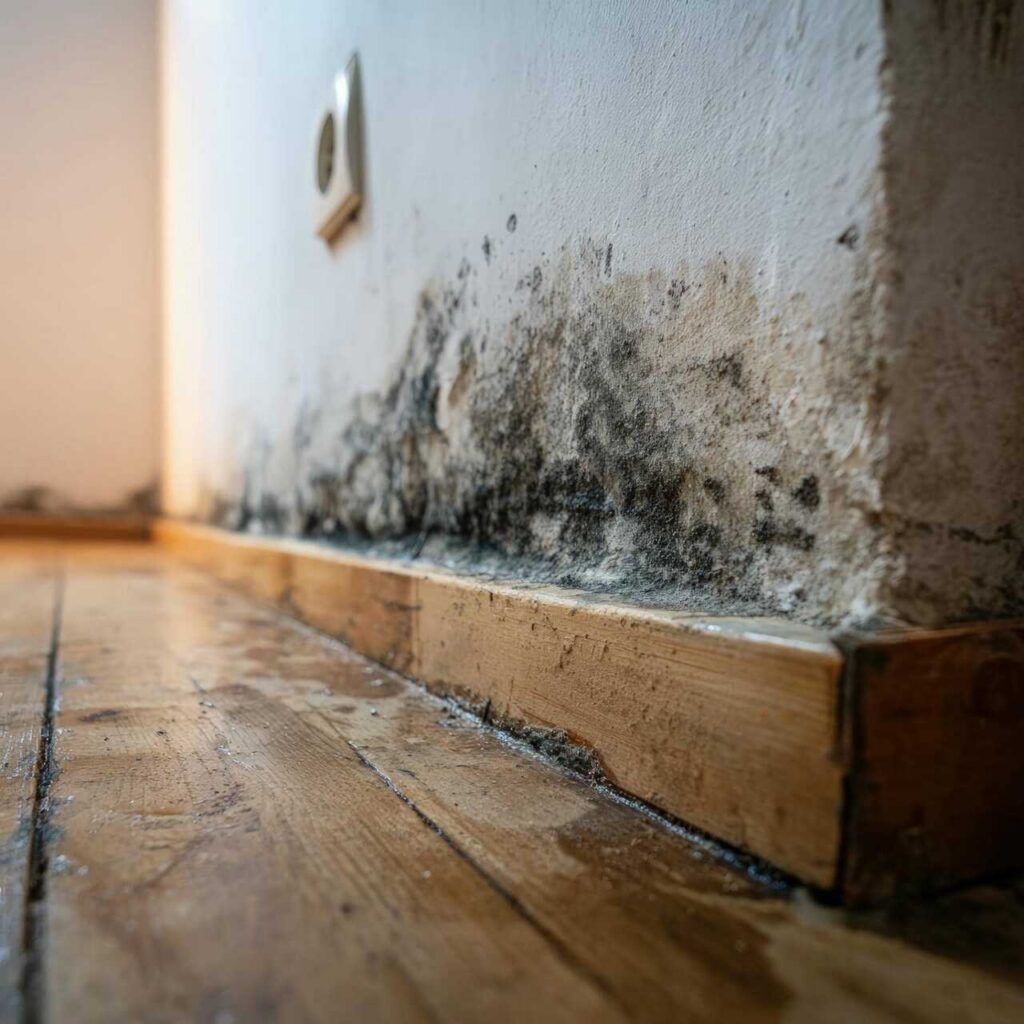
Look for discoloration, musty smells, and dampness in hidden areas like behind walls or under flooring.
Additionally, consider air quality testing to measure mold spores in the environment, ensuring that any potential growth is identified and addressed promptly.
Visual Inspections for Mold
Often, homeowners underestimate the importance of conducting thorough visual inspections for mold following water damage cleanup.
Effective mold inspection techniques can help you identify potential issues before they escalate. Here are four key visual mold indicators to look for:
Discoloration: Check for dark, green, or black stains on walls and ceilings.
Texture Changes: Look for fuzzy or slimy surfaces, which often indicate mold growth.
Musty Odors: A persistent musty smell can signal hidden mold.
Condensation: Pay attention to areas with excessive moisture, as they’re prime spots for mold development.
Air Quality Testing
To ensure your home is safe and free of mold after water damage cleanup, air quality testing is an essential step.
This process helps identify the presence of mold spores in the air, which can pose health risks. You’ll want to use professional-grade air quality testing kits or hire a certified specialist for accurate results.
These tests often involve air sampling or surface swabs, providing a thorough view of potential mold contamination. By regularly monitoring your home’s air quality, you can detect hidden mold issues early and take necessary action.
Consult Professionals for Comprehensive Water Damage Solutions
While you might consider tackling minor water damage on your own, consulting professionals for thorough water damage solutions is essential for effective mold prevention.
Experts bring specialized knowledge and equipment that can markedly reduce the risk of mold growth.
Here are four key reasons to engage professionals:
Comprehensive Assessment: They’ll evaluate the extent of the damage and identify hidden moisture.
Mold Remediation Expertise: Professionals utilize advanced techniques to safely remove mold and prevent recurrence.
Insurance Claims Assistance: They can help navigate the claims process, ensuring you get the coverage you deserve.
Long-term Solutions: Experts provide strategies to mitigate future water damage risks, promoting a healthier living environment.
Frequently Asked Questions
How Long Does It Take for Mold to Grow After Water Damage?
Mold growth can start within 24 to 48 hours after water damage, depending on water damage factors like humidity, temperature, and material type. Understanding the mold growth timeline helps you take timely preventive measures.
Can Mold Grow in Hidden Areas After Water Damage?
Yes, mold can manifest in mysterious, hidden areas after water damage. When hidden moisture lingers, it creates a perfect playground for mold spores, leading to potential problems if not properly addressed. Stay vigilant and proactive.
What Types of Mold Are Most Dangerous to Health?
Toxic molds like Stachybotrys and Aspergillus can pose serious health risks. If you experience mold symptoms such as respiratory issues or skin irritations, it’s essential to address the mold immediately to safeguard your well-being.
How Can I Tell if My Home Is at Risk for Mold?
You can assess your home’s mold risk by using mold detection methods like visual inspections and air sampling, along with moisture assessment techniques to identify damp areas. Regular checks help maintain a healthy living environment.
Is It Safe to Stay in My Home During Mold Remediation?
It isn’t safe to stay in your home during the mold remediation process. Mold safety is vital; exposure can worsen health issues. Make certain you vacate until professionals complete the remediation and confirm it’s safe to return.
Review
By implementing these mold prevention strategies, you’re not just safeguarding your home; you’re creating an unassailable fortress against the menace of mold! Every fan, dehumidifier, and seal you use transforms your space into a dry, mold-free utopia. Regular inspections and maintenance are your vigilant guards, ensuring no moisture dares to invade. So, take action now—your home deserves nothing less than a heroic defense against the relentless threat of mold, and you hold the key to its triumph!