It’s interesting how a simple leak can escalate into a serious mold problem if not addressed promptly. When water damage occurs, you might think the worst is over once the water’s gone, but that’s just the beginning. Understanding the steps to prevent mold growth is vital. You’ll want to know the best practices to ensure your home remains safe and healthy after water damage. Let’s explore these critical tips together.
Key Takeaways
- Immediately dry all affected areas using fans and dehumidifiers to eliminate moisture that encourages mold growth.
- Regularly inspect for signs of dampness, discoloration, or odors in previously affected spaces.
- Maintain proper ventilation by opening windows and using exhaust fans to reduce humidity levels.
- Keep gutters clear and functioning to prevent water buildup that can lead to mold issues.
- Educate all residents on mold prevention strategies and the importance of prompt reporting of water damage signs.
Common Causes of Water Damage and How to Identify Them
When you experience water damage in your home, understanding its common causes can help you identify and address the issue promptly.
One primary culprit is leaky pipes, which can occur due to corrosion, wear, or poor installation. Regularly check under sinks and around appliances for any signs of dampness or mold growth.
Another common issue is roof leaks, often caused by damaged shingles or poor flashing. Inspect your roof after severe weather and look for missing or damaged materials.
Additionally, pay attention to your gutters; clogs can lead to overflow and water seepage.
Act Quickly in Water Damage Restoration by Removing Standing Water
When faced with water damage, your first step should be to assess the severity of the situation.
Quickly removing standing water is essential, so use proper equipment like pumps and wet vacs to expedite the process.
Don’t forget to prioritize safety measures, ensuring you wear protective gear and turn off electricity in the affected area.
Assess Water Damage Severity
To effectively prevent mold growth after water damage, you need to quickly assess the severity of the situation by removing any standing water.
Start with a thorough water damage assessment; identify areas where water has pooled and check for damage severity indicators, such as discoloration on walls or ceilings, warped flooring, and musty odors.
These signs can reveal how deeply the water has penetrated materials. Pay attention to hidden spaces, like behind cabinets or under carpets, where moisture can linger.
The sooner you identify the extent of the damage, the better your chances are of preventing mold growth.
Establishing a clear understanding of the situation empowers you to take the necessary next steps for effective restoration.
Use Proper Equipment
Acting quickly is essential in water damage restoration, and using the right equipment can make all the difference.
To effectively remove standing water, you’ll need a combination of equipment types, such as pumps, wet vacuums, and fans. Submersible pumps are great for large volumes of water, while wet vacuums can handle smaller areas. High-powered fans help with drying surfaces, which is vital for mold prevention.
Additionally, consider using dehumidifiers to reduce humidity levels, preventing mold growth in hidden corners. By investing in the right equipment, you’ll expedite the drying process and create a safer environment for you and your loved ones.
Prioritize Safety Measures
Using the right equipment is just the first step; prioritizing safety measures during water damage restoration is equally important.
Before you start, confirm you have the necessary safety gear, including gloves, masks, and goggles, to protect yourself from contaminants. Create an emergency plan that outlines the steps to take if the situation escalates.
Always check for electrical hazards and turn off power sources if needed. As you remove standing water, be cautious of slippery surfaces and potential structural damage.
Keep your workspace well-ventilated to minimize mold growth and confirm that you’re working in a safe environment.
Thoroughly Dry Out Affected Areas
Once water damage occurs, it’s crucial to act quickly and thoroughly dry out affected areas to prevent mold growth.
Begin by removing any standing water and then focus on drying out your space effectively. Here are some key steps to take into account:
Use fans and dehumidifiers to circulate air and reduce humidity.
Open windows to improve ventilation and speed up the drying process.
Inspect hidden areas like behind walls or under carpets, which may trap moisture.
Monitor moisture levels regularly with a moisture meter to verify everything is drying properly.
Control Humidity With Dehumidifiers
To effectively control humidity levels after water damage, dehumidifiers play an essential role in maintaining a dry environment.
Start by placing your dehumidifier in the most affected areas to maximize its efficiency. Adjust the dehumidifier settings based on the humidity levels; aim for a range of 30-60% for ideal results.
Regularly monitor humidity levels using a hygrometer to ensure your efforts are successful. If you notice the levels rising, increase the dehumidifier’s capacity or run it continuously until stability is achieved.
Remember to empty the water reservoir frequently or set it up for continuous drainage if possible.
Clean and Disinfect Surfaces to Prevent Mold Growth
As soon as the water damage occurs, it’s crucial to clean and disinfect all affected surfaces to thwart mold growth effectively. Proper surface sanitization minimizes the risk of mold by removing moisture and contaminants.
Use effective disinfectants that can kill mold spores and bacteria. Follow these steps for the best results:
- Remove any standing water and debris.
- Clean surfaces with a mixture of water and a suitable disinfectant.
- Ensure all areas are thoroughly dried after cleaning.
- Regularly check for signs of moisture in the cleaned spaces.
Choose Mold-Resistant Products for Prevention
While cleaning and disinfecting surfaces is essential after water damage, choosing mold-resistant products can greatly enhance your prevention efforts.
Start by applying mold-resistant paints to walls and ceilings; these specialized coatings inhibit mold growth and provide an extra layer of protection.
When it comes to flooring, consider waterproof options that resist moisture accumulation, such as vinyl or tile. These materials withstand spills and prevent mold from taking root.
By investing in these products, you create a healthier living environment for yourself and your loved ones.
Key Signs of Mold Growth to Watch for After Restoration
How can you be certain that mold hasn’t made a comeback after restoring your home? Being vigilant is key. Use these mold detection techniques and home inspection tips to stay ahead:
Musty Odors: Pay attention to any lingering, unpleasant smells, as they often indicate hidden mold.
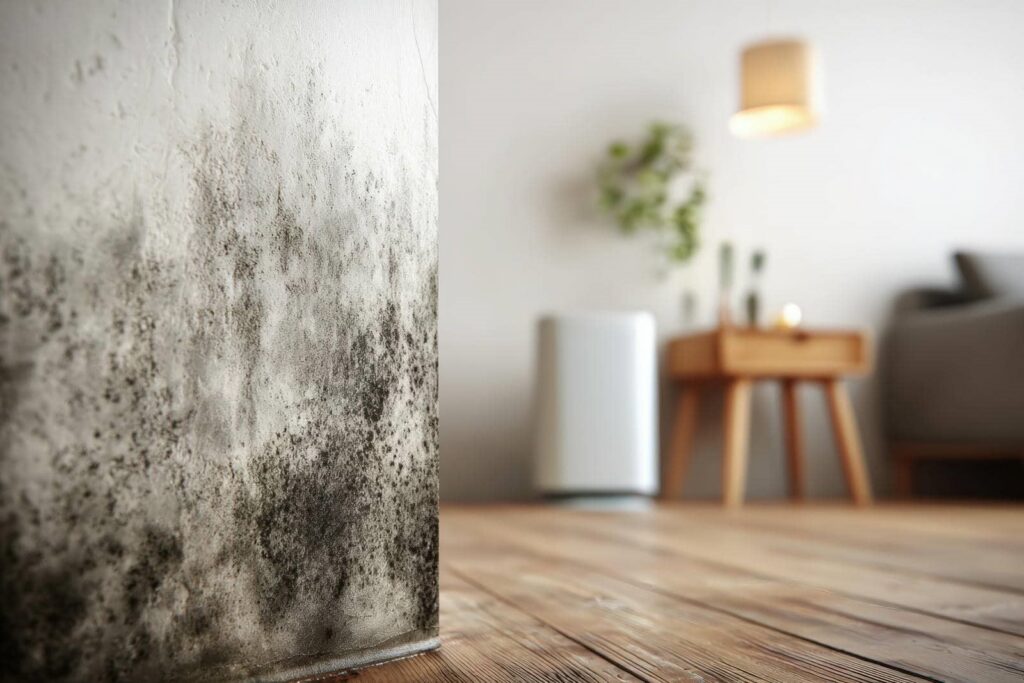
Visual Signs: Look for dark spots or discoloration on walls, ceilings, and floors.
Increased Humidity: Monitor indoor humidity levels; anything above 60% can encourage mold growth.
Allergy Symptoms: Notice if you or your family members experience unexplained allergy-like symptoms, which may signal mold presence.
Actively checking for these signs ensures your home remains a safe, welcoming space for everyone.
Stay proactive to protect your sanctuary from unwanted mold!
Keep up With Regular Maintenance to Prevent Issues
Maintaining your home is essential for preventing mold issues, especially after experiencing water damage. To keep your living space mold-free, schedule seasonal inspections to identify potential problem areas. Check for leaks in plumbing, roofs, and windows, as even minor moisture can lead to mold growth.
In addition to inspections, prioritize routine repairs. Fix any damage promptly, whether it’s a cracked tile or a peeling paint area. Verify your gutters are clear and functioning properly to prevent water buildup.
Regularly cleaning and maintaining HVAC systems can also minimize humidity levels, on which mold thrives. By staying proactive with these maintenance tasks, you create a healthier home environment that fosters comfort and belonging for you and your loved ones.
Know When to Call in a Professional Remediation Service
When faced with significant water damage, it’s crucial to recognize the signs that indicate it’s time to call in a professional remediation service. Ignoring these signs can lead to mold growth and further complications.
Here are some key indicators to watch for:
- Persistent dampness or musty odors
- Visible mold growth in various areas
- Water-stained walls, ceilings, or floors
- Health issues like respiratory problems or allergies
If you notice any of these signs, don’t hesitate to arrange a mold inspection.
Professionals can assess the situation and provide tailored remediation options to ensure your home is safe and mold-free.
Frequently Asked Questions
How Long Does It Take for Mold to Start Growing After Water Damage?
Mold can start growing within 24 to 48 hours after water damage, depending on various factors like humidity, temperature, and material types. Understanding this mold growth timeline helps you take timely action to prevent further issues.
Can Mold Grow in Hidden Areas Like Walls or Ceilings?
Yes, mold can grow in hidden areas like walls or ceilings. Wall moisture creates an environment for hidden mold to thrive, so it’s essential to inspect and address any water damage promptly to prevent growth.
Is Bleach Effective for Killing Mold After Water Damage?
Think of bleach as a sword against mold, but it’s not always effective. While it can help with surface mold removal, it often misses hidden spores. For thoroughness, consider professional methods for total eradication.
What Health Risks Are Associated With Mold Exposure?
Mold exposure can lead to various health risks, including mold symptoms like respiratory issues and allergic reactions. You might experience sneezing, coughing, or skin irritation, highlighting the importance of addressing mold promptly to protect your health.
How Can I Tell if the Mold Is Toxic or Non-Toxic?
To identify if mold is toxic, use mold identification techniques like visual inspection and air sampling. Watch for toxic mold symptoms, such as respiratory issues or skin irritation. If in doubt, consult a professional for an accurate assessment.
Summary
By staying proactive and addressing water damage promptly, you can greatly reduce the risk of mold growth in your home. Remember, mold doesn’t just appear overnight; it thrives in damp environments, so maintaining low humidity and regular inspections is essential. If you notice any signs of mold, don’t hesitate to seek professional help. After all, a little vigilance now can save you from bigger headaches later on—because once mold takes hold, it’s often a much tougher battle to fight.